

When someone searches for “plumber near me” or “dentist in” plus a city, Google usually shows a map with three businesses before any regular results. Those three spots collect a large share of the calls, and that is exactly what Google Maps SEO services aim to win. Before you hire anyone, though, it helps to understand how map rankings actually work, because it changes what you should expect and what you should pay for.
AT A GLANCE
- Google ranks map results on three broad factors: relevance, distance and prominence.
- Distance is outside your control, so good work focuses on relevance and prominence.
- A real service covers your profile, website, citations, reviews and measurement, not just one of them.
- Be wary of guaranteed positions, fake addresses and bulk review offers.
How Google decides who appears on the map
Google has publicly described three main factors behind local results. Understanding them is the best protection against vague sales pitches.
Relevance
Relevance is how well your business matches what the person searched for. It comes from your primary and secondary categories, your listed services, your business description and the content of your website. A roofing company whose website barely mentions flat roofs will struggle to appear for “flat roof repair,” even if it does that work every week.
Distance
Distance is how far your business is from the searcher or from the location named in the search. You can’t change it, and no provider can move you closer to every customer. This is why rankings differ from street to street and why a single screenshot of a “number one position” proves very little.
Prominence
Prominence reflects how well known and trusted your business is. Google looks at signals such as reviews, mentions across the web, links to your website and your overall presence online. Prominence is built slowly, which is why map SEO is a process rather than a quick fix.
You can’t move your office closer to every customer, but you can become the most relevant and trusted choice nearby.
What professional Google Maps SEO services should include
A serious provider starts with an audit rather than a fixed package. They should look at your profile, your website and your competitors, and only then propose priorities. Typical work falls into a few clear areas.
- Profile work: categories, services, attributes, photos and posts that reflect what you really offer.
- Website alignment: location or service-area pages, consistent contact details and LocalBusiness schema markup.
- Citations: correct, consistent listings in relevant directories and industry sites.
- Reviews: a simple, rule-compliant system for asking customers and replying to feedback.
- Tracking: calls, direction requests, website visits and visibility across your service area.
The website matters more than many expect
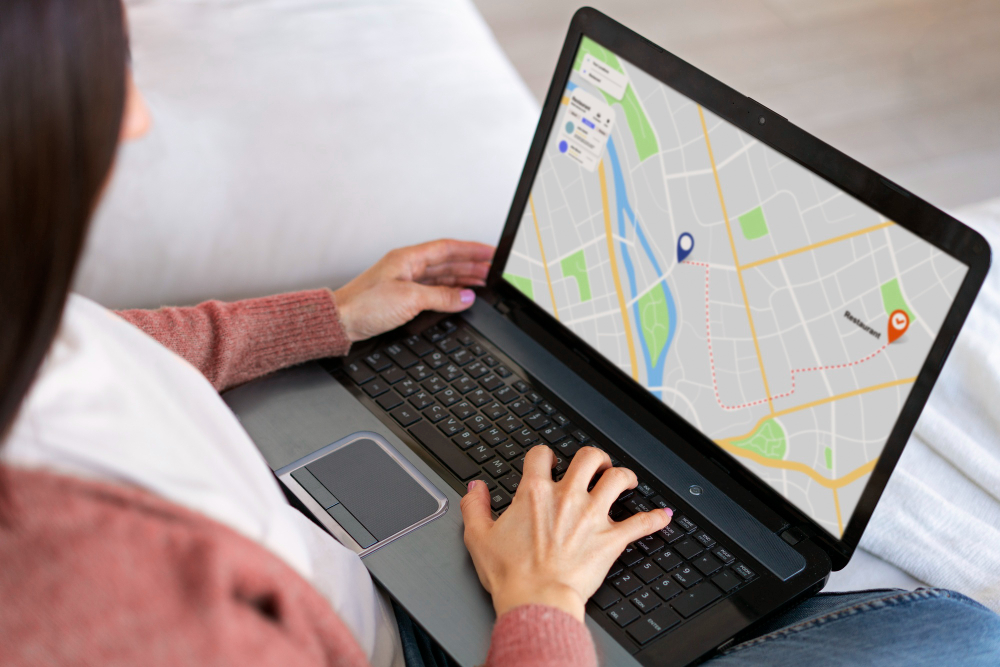
It is easy to think of map rankings as something that happens only inside Google’s tools. In practice, your website is a large part of relevance and prominence. Google reads the page linked from your profile to confirm what you do and where you do it.
For a business serving several towns, clear service-area pages often make a noticeable difference, as long as each page has genuinely useful, specific content rather than the same text with a different city name. A fast, mobile-friendly site also matters, because most map searches happen on phones and visitors leave slow pages quickly.
How progress should be measured
Rankings on the map change depending on where the search happens. A good provider will therefore show visibility across a grid of points in your area rather than one position checked from their own office. Grid-based reports make it clear where you are strong and where you are still invisible.
Rankings, however, are only a means to an end. The numbers that matter to your business are calls, direction requests, form submissions and booked jobs. Ask for reports that connect visibility with these outcomes, and agree on a baseline before work begins so you can judge progress honestly.
Red flags when choosing a provider
01
Guaranteed first place.
Nobody controls Google’s results, so a guarantee is either misleading or relies on risky tactics.
02
Virtual office addresses.
Fake locations break Google’s rules and can get your profile suspended.
03
Bulk or paid reviews.
They violate guidelines and can be removed, often with a penalty.
04
Keyword-stuffed names.
Short-term gains are not worth the risk of losing the listing.
05
No access for you.
You should always own your profile and website accounts.
06
Vague reporting.
If you can’t see what was done each month, you can’t judge the value.
What to ask before you sign
A short conversation reveals a lot. Ask how the provider will measure success, which tasks happen in the first months and what they need from you. Ask how they handle reviews and whether all work follows Google’s guidelines. Finally, ask who will own the accounts and content if you stop working together.
Good Google Maps SEO services should leave you with a stronger profile, a better website and a clear picture of what brings customers. Even if you later manage things yourself, that foundation keeps working for you.
Is it worth it for your business?
For businesses that depend on local customers, such as trades, clinics, salons, restaurants and repair services, map visibility is often one of the most valuable marketing channels. If your competitors are already active and you are not visible in your own area, the gap usually grows over time. A transparent audit is a low-risk first step: it shows where you stand and whether Google Maps SEO services are likely to pay off for you, together with broader local search marketing on your website.
Frequently asked questions
How long does Google Maps SEO take?
It depends on competition and your starting point. Fixing basic problems can help fairly quickly, while building reviews and prominence usually takes several months of steady work.
Can I do map SEO myself?
Yes, many basics are manageable for an owner. Outside help makes sense when you lack time, face strong competition or need website and technical work.
Do I need a physical office to rank on Google Maps?
You need a real business. Service-area businesses can hide their address and still appear for searches in the areas they serve.
Does advertising on Google improve my map ranking?
No. Paid ads appear separately and don’t change organic map positions.
Find out where you stand on the map
Web Smarts reviews your Google Business Profile, website and local competitors, then shows you clear priorities without inflated promises. Tell us about your business and the area you serve.